Cirrus Celebrates 10 Years of Transforming Personal Aviation With the Vision Jet
Cirrus showcases the evolution of the world’s best-selling jet in General Aviation with new capabilities, connected
Press Release Disclaimer: This is a press release distributed through the XPR Media network. It has not been independently verified by our newsroom.


Cirrus (Cirrus Aircraft Ltd.), the manufacturer of the best-selling jet in General Aviation, today celebrates 10 years of the Collier Trophy-winning Vision®Jet at NBAA-BACE 2026, highlighting a decade of innovation that has transformed the world’s first single-engine personal jet equipped with the Cirrus Airframe Parachute System® (CAPS®), an integrated whole-airframe parachute system into an increasingly capable platform for business, special missions, supplemental lift, and Part 135 charter operations.
This press release features multimedia. View the full release here: https://www.businesswire.com/news/home/20261019980447/en/
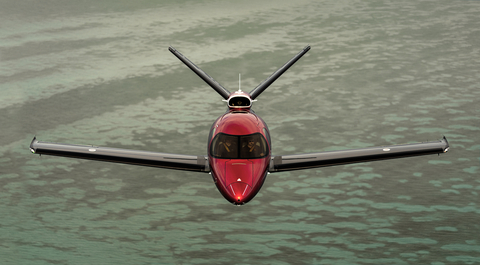
Cirrus celebrates 10 years of the Collier Trophy-winning Vision® Jet highlighting a decade of innovation that has transformed the world’s first single-engine personal jet equipped with the Cirrus Airframe Parachute System® (CAPS®), an integrated whole-airframe parachute system into an increasingly capable jet for business, special missions, supplemental lift, and Part 135 charter operations. Since earning FAA type certification in 2016, the Vision Jet has evolved through three generations of innovation, expanding its mission capabilities while delivering the performance, safety, and simplicity that define the Cirrus ownership experience. Today, the Vision Jet serves a growing global fleet of owners and operators with an integrated ecosystem spanning aircraft technology, flight training, service and support, connectivity, pre-flown aircraft, and fleet management.
Since earning FAA type certification in 2016, the Vision Jet has evolved through three generations of innovation, expanding its mission capabilities while delivering the performance, safety, and simplicity that define the Cirrus ownership experience. Today, the Vision Jet serves a growing global fleet of owners and operators with an integrated ecosystem spanning aircraft technology, flight training, service and support, connectivity, pre-flown aircraft (Cirrus NEXT™), and fleet management.
“Over the last decade, the Vision Jet has grown into an entirely new category of business jet and changed what’s possible for regional travel,” said Zean Nielsen, Chief Executive Officer of Cirrus. “Continuous innovation in the aircraft, paired with our investment in training, service, connectivity, and support, has built a complete ecosystem that lets customers do more with their Vision Jet. Today, we’re building on that foundation with an aircraft and ownership experience that helps customers accomplish even more, whether they’re flying for business or connecting people and communities.”
A Decade of Vision Jet Innovation
First certified by the FAA in 2016, the Vision Jet introduced a new approach to jet aviation, combining a spacious cabin, single-engine efficiency, advanced avionics, and award-winning safety features including CAPS® and Safe Return™ Emergency Autoland in a platform designed around the pilot and passenger experience.
Over the past decade, Cirrus has continued to advance the Vision Jet. The G2 Vision Jet introduced improved performance, range, and cabin enhancements, followed by the G2+ Vision Jet with expanded connectivity, better takeoff performance and Safe Return™ Emergency Autoland. The 317 ktas, FL310-capable G3 Vision Jet then added ATC Datalink, Spectra™ LED Wingtip Lights capabilities and a new 6+1 seating configuration, in a cabin designed to carry six adults comfortably. Having recently reached the milestone of more than 800 Vision Jet deliveries worldwide, the aircraft remains the world’s best-selling jet in General Aviation and has established a growing role beyond personal transportation.
The Mission-Ready Jet
As the Vision Jet fleet has expanded, so have the ways customers utilize the aircraft.
Vision Jets support business transportation, supplemental lift, special missions, and Part 135 operations, giving organizations a differentiated solution for missions where efficiency, flexibility, and access matter.
Among those missions is organ transportation. Indiana Donor Network, the federally designated organ procurement organization serving Indiana, operates TxJet, the nation’s first nonprofit organ transplant aviation program. TxJet flies the Vision Jet to move organs and surgical recovery teams quickly between donor and transplant hospitals throughout the region.
“Every organ we recover is a gift from a donor and their family, and time is the one thing we can never get back,” said Steven Johnson, FACHE, Chief Operating Officer of Indiana Donor Network. “The Vision Jet gives TxJet a fast, efficient way to move organs and recovery teams between hospitals across the region, and it gets us into community airports closer to the places we serve. That flexibility helps us honor every gift and get it to a patient waiting for a transplant.”
The growing use of the Vision Jet in professional operations demonstrates the platform’s versatility and its ability to complement existing fleets while providing operators with an efficient solution for shorter missions and access to a broader network of airports.
Jet Ownership and Operator Ecosystem
Beyond the aircraft, Cirrus continues to expand the services and technology that help Vision Jet owners and professional operators maximize aircraft availability, simplify operations, and manage their fleets.
Cirrus provides factory-direct service and support, including Vision Jet type ratings at the Vision Center in Knoxville, with recurrent type training and instrument proficiency checks now available at Cirrus Scottsdale. The Cirrus Authorized Network of Training and Maintenance Centers further supports owners worldwide.
The company is also advancing aircraft maintenance and fleet operations management automation through JetStream and Cirrus IQ™.
Cirrus IQ provides owners and operators with connected aircraft information and insights designed to simplify aircraft management and increase visibility into aircraft status. JetStream provides a comprehensive ownership program designed to simplify scheduled and unscheduled maintenance, training, and other operating requirements.
Together, these services create an integrated ecosystem around the Vision Jet, extending the Cirrus experience throughout aircraft ownership.
Learn more about the G3 Vision Jet at NBAA-BACE in the LVCC booth #2505 or at cirrusaircraft.com/aircraft/vision-jet.
About Cirrus
Cirrus is the recognized global leader in personal aviation and the maker of the best-selling SR Series piston aircraft and the Vision Jet, the world’s first single-engine Personal Jet, and the recipient of the Robert J. Collier Trophy. Founded in 1984, the company has redefined aviation performance, comfort and safety with innovations like the Cirrus Airframe Parachute System (CAPS) – the first FAA-certified whole-airframe parachute safety system included as standard equipment on an aircraft. To date, worldwide flight time on Cirrus aircraft is over 19 million hours, and over 300 people have returned home safely to their families as a result of the inclusion of CAPS as a standard feature on all Cirrus aircraft. The company has seven locations in the United States, including Duluth, Minnesota; Grand Forks, North Dakota; Greater Dallas, Texas; Greater Phoenix, Arizona; Greater Orlando, Florida; Knoxville, Tennessee and Benton Harbor, Michigan. Learn more at cirrusaircraft.com.
View source version on businesswire.com: https://www.businesswire.com/news/home/20261019980447/en/
Media gallery