Bale Collision Center Explains What Happens When Collision Damage Affects Vehicle Lighting
Little Rock, AR - September 28, 2026 - PRESSADVANTAGE - Bale Collision Center has published consumer guidance focused
Press Release Disclaimer: This is a press release distributed through the XPR Media network. It has not been independently verified by our newsroom.

Little Rock, AR – September 28, 2026 – PRESSADVANTAGE –
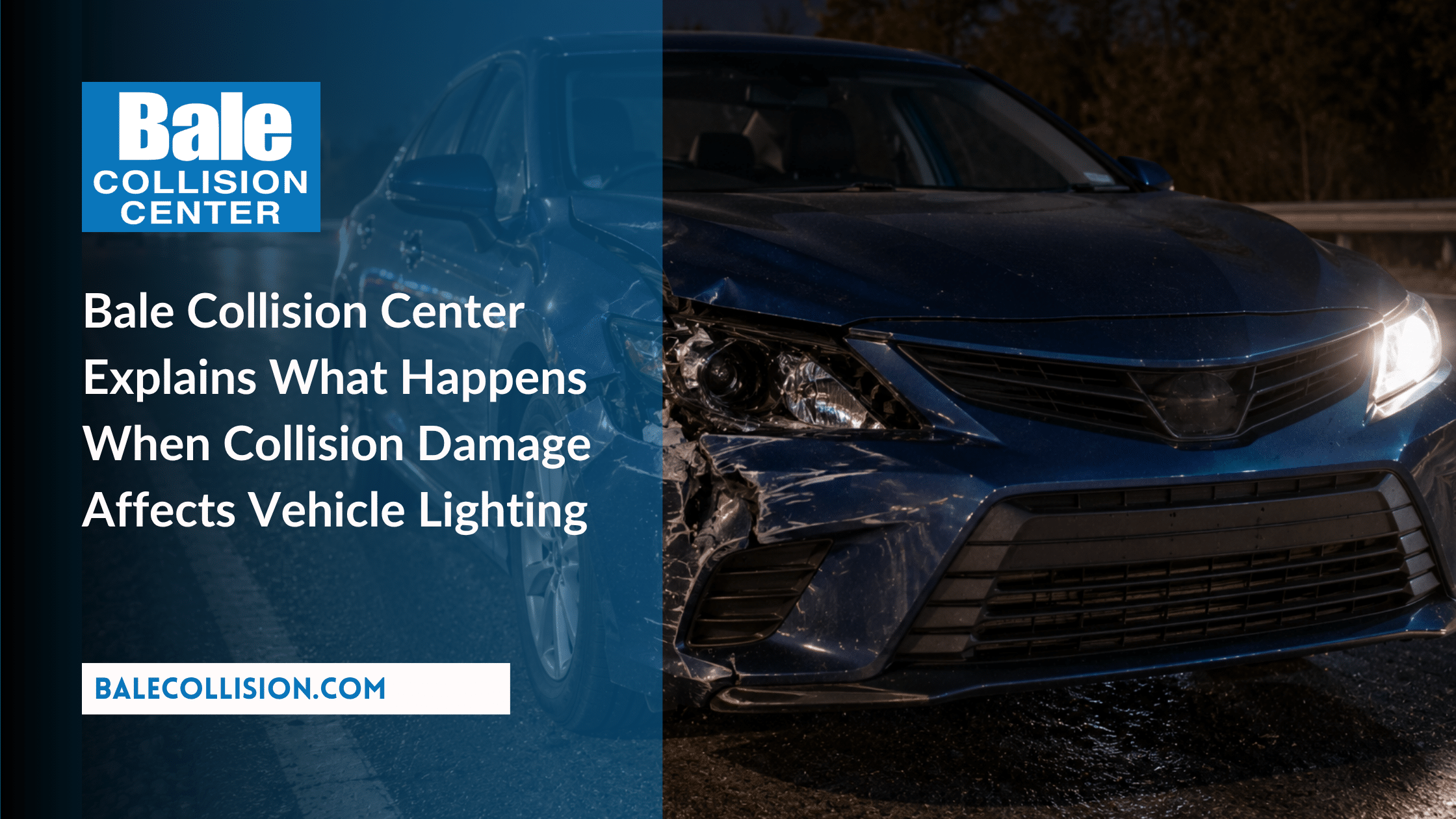
Bale Collision Center has published consumer guidance focused on a specific post-collision issue: why checking whether a headlight or taillight turns on may not fully establish the condition of the lighting area after an accident. The September publication explains how repair planning can account for lamp mounting, vehicle-specific lighting equipment, electrical connections, and adjacent body damage.
The guidance expands on Bale Collision Center’s collision repair information by examining lighting as an integrated part of the collision-damaged area rather than solely as an electrical function.
Exterior lamps are located in areas commonly involved in front, rear, and corner impacts. Collision damage may be immediately visible through a cracked lens, broken housing, displaced lamp, or loss of a lighting function. Other conditions may involve components behind or around the lamp.
A lighting assembly is held in position by mounting tabs, brackets, fasteners, and adjoining attachment areas. An impact around a bumper, fender, grille, quarter panel, trunk, or liftgate can affect this relationship. Technicians can therefore evaluate how the lamp fits within the repaired area in addition to checking its operation.
Headlight position can require particular attention when the mounting area has been involved in a collision. If an assembly has shifted, applicable vehicle-specific repair information can help determine the inspection, installation, or aiming procedures associated with that lighting system.
The September publication also addresses the increasing variation among replacement lighting assemblies. Depending on model year, trim level, and installed equipment, a vehicle may use LEDs, control modules, automatic leveling equipment, adaptive lighting, or other electronic features.
These differences can affect parts identification. Two assemblies intended for the same general vehicle model may support different equipment, making the individual vehicle configuration relevant when determining the appropriate replacement component.
Electrical components can also be located within the affected area. Wiring, connectors, and modules may be attached to or positioned behind a lamp. When a lighting function stops operating after an accident, inspection can account for these connections along with the condition of the assembly.
Bale Collision Center’s auto body repair information provides additional context about evaluating exterior components as part of a broader collision repair.
Rear lighting can require similar vehicle-specific assessment. Brake lights, turn signals, reverse lights, and running lights may be combined within one assembly or divided between lamps mounted to the body and lamps installed in a trunk lid or liftgate. Repair planning can identify the configuration present on the individual vehicle before determining which components are involved.
Lighting located in bumpers and mirrors can introduce additional considerations because those areas may contain other equipment. A bumper can incorporate sensors, wiring, or cameras, while a mirror assembly may combine lighting with power adjustment, heating, cameras, or other electronic functions.
The publication also addresses moisture that appears inside a lamp following an accident. When fogging or visible droplets develop near the impact area, the housing, seals, mounting condition, and surrounding components can be evaluated to identify the source. Timing alone does not establish that the collision caused the moisture.
The specific purpose of the September guidance is to separate three different findings that consumers can easily group together: whether a lighting function operates, whether the assembly remains physically positioned as intended, and whether the collision affected related components or electronics.
That distinction provides a more focused basis for understanding lighting-related repairs. A working lamp confirms an operating function, while inspection of the affected area provides information about physical condition and component relationships.
Vehicle-specific procedures remain an important part of that assessment. Depending on the installed lighting system and work performed, manufacturer information may identify procedures related to component installation, aiming, initialization, diagnostics, or other operations. The applicable process depends on the individual vehicle rather than a universal requirement for every damaged lamp.
Drivers can contribute useful information by documenting observable changes following an accident, including a lamp that has shifted, missing lighting functions, warning indicators, moisture inside an assembly, visible housing damage, or changes in fit with surrounding panels.
The September publication also draws attention to lighting used for visibility and signaling. When an accident affects headlights, brake lights, turn signals, taillights, or other exterior lighting, those functions can be included in the vehicle’s post-collision evaluation.
Information about the facility is available through Bale Collision Center’s Downtown Little Rock location resource.
The newly published guidance narrows its focus to the difference between electrical operation and the complete physical condition of a collision-affected lighting area. By examining mounting, configuration, electrical connections, and adjacent components alongside lamp operation, the resource gives consumers a clearer explanation of how lighting can become part of a collision repair plan.
Bale Collision Center is a family-owned collision repair business that has served the Little Rock community since 1952. The company provides collision repair, auto body repair, automotive paint services, paintless dent repair, glass replacement, and ADAS services through its two Little Rock locations. Its Downtown facility is located at 100 N Cross St, Little Rock, AR 72201.
###
For more information about Bale Collision Center, contact the company here:
Bale Collision Center (Downtown)
Jason Spiller
(501) 375-0910
jspiller@baleautomotive.com
100 N Cross St, Little Rock, AR 72201, United States